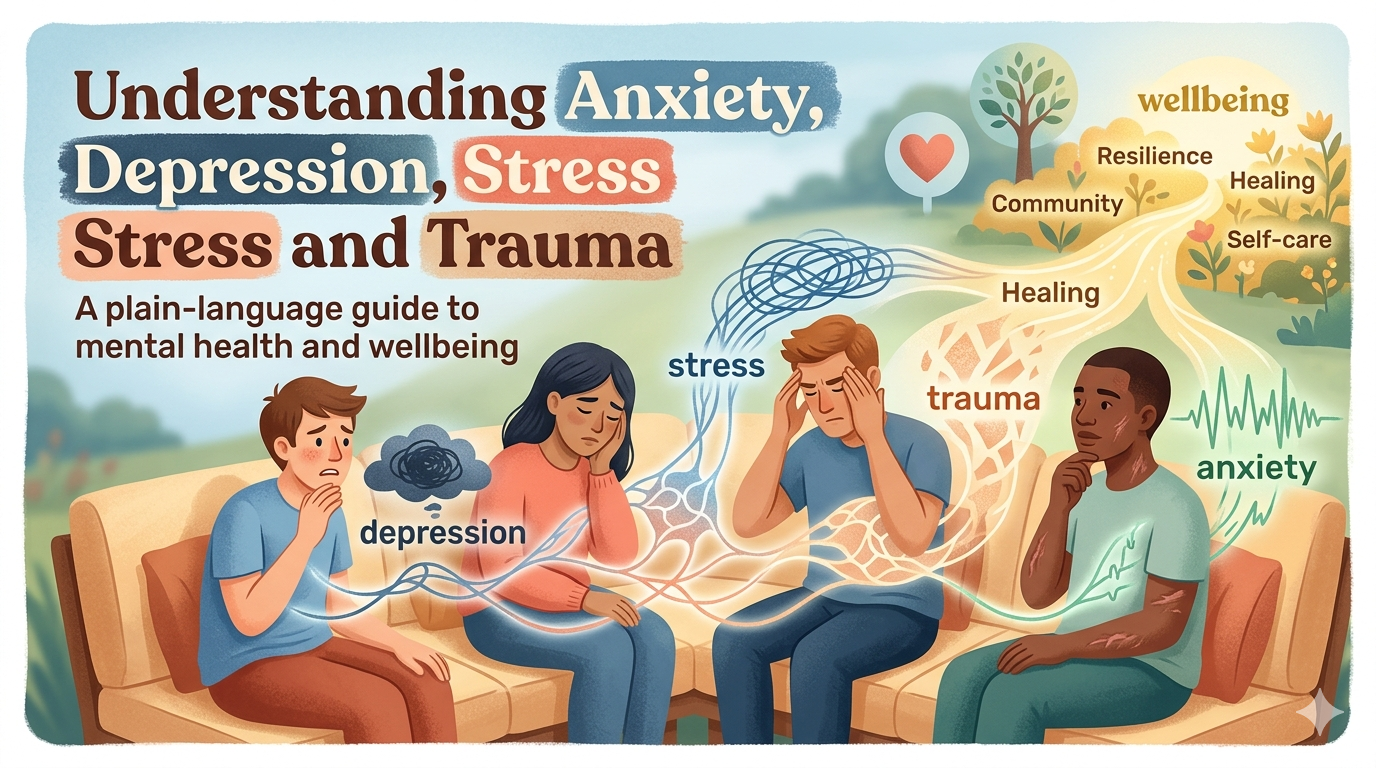
Understanding Anxiety, Depression, Stress and Trauma
A plain-language guide to mental health and wellbeing
Disclaimer
This blog is intended for general informational and educational purposes only. The content is not a substitute for professional medical advice, diagnosis or treatment. Always seek the guidance of a qualified healthcare provider with any questions you may have regarding a mental health condition or any other medical concern. Never disregard professional advice or delay seeking it because of something you have read here.
Surveys report that anxiety, depression and stress are the most common types of mental health issues in the UK, particularly among young adults and working professionals. In this article we will look at what these terms actually mean, what causes them, how they affect the body, and — most importantly — what we can do about them.
Definitions
Anxiety
Anxiety is a feeling of worry, nervousness or unease, typically about an event that is coming or something with an uncertain outcome. In simple terms, it is the experience of worrying about something that might happen in the future.
Depression
Depression means different things depending on the context. Medically speaking, it is a state in which a person feels very sad, anxious and without hope, often accompanied by symptoms such as sleep disturbances. It is more than just feeling a bit low — it is a persistent condition that can significantly affect daily life.
Stress
Stress is mental or emotional strain resulting from demanding circumstances. It can be broadly understood as the effect of anything that seriously threatens homeostasis — that is, the body's internal balance.
Trauma
Trauma has two main meanings:
• Medical: a physical injury, such as a brain trauma.
• Psychological: a mental condition caused by severe shock, stress or fear — particularly when the harmful effects last for a long time.
All four of these conditions can produce a number of physical and emotional symptoms, which is why they are important to understand and take seriously.
Stress: Acute vs Chronic
Now let’s address the elephant in the room — stress. Did you know that not all stress is bad? Stress can actually be acute (positive) or chronic (negative).
Acute Stress (the good kind)
Acute stress is short-lived and can actually enhance performance. Think of the rush you feel when exercising, starting a new job, or enjoying a rollercoaster ride. This kind of stress helps the body rise to a challenge and can be motivating and energising.
Consider this thought from James 1:2–4:
“Consider it pure joy, my brothers and sisters, whenever you face trials of many kinds, because you know that the testing of your faith produces perseverance. Let perseverance finish its work so that you may be mature and complete, not lacking anything.” — James 1:2–4
Take heart when you face trials — they can build strength and resilience of character.
Chronic Stress (the harmful kind)
Chronic stress is prolonged stress — it occurs when the demands placed on a person consistently exceed their ability to cope. This is the type we need to be concerned about. Chronic stress is inflammatory and can lead to anxiety, fatigue, depression and even physical illness. Trauma, too, undoubtedly causes prolonged stress on the body.
Sources of Stress
Stress can come from many different areas of life. Here are the main categories:
Physical
Physical strain on the body, such as illness, lack of sleep, poor lifestyle choices (junk food, lack of exercise) and overall neglect of physical health.
Emotional
Worry, fear, grief, low self-esteem, and conflict with friends or family.
Environmental
Stressors from our external surroundings, such as noise, pollution, unsafe living conditions or exposure to harmful chemicals — both outdoors and in the home (e.g. mould).
Chemical
Chemicals found outdoors or in the home, such as toxins from mould, pollutants, certain medications, junk food and ultra-processed food.
The Bigger Picture: Stress, Work and Society
Research conducted in the UK in recent years shows that work is a major cause of chronic stress, particularly driven by heavy workloads and job pressure. This can lead, in some cases, to levels of anxiety and depression that become debilitating. A Health & Safety Executive report found that health and family concerns account for around 34% of all stressors.
Lack of sleep is also a significant contributing factor — the current cost of sleep deprivation to the economy is estimated in the tens of billions annually in the UK alone.
How Stress Affects the Body
Whenever we breathe in, digest, absorb or are exposed to any stressor — whether through our skin, lungs, gut or other organs — the stress response is triggered throughout the body. It affects our brain and even our sensory organs such as the skin.
When we go through stressful times, the brain is supposed to break it down. But when stress is not properly processed and released, it compounds in the body and can harm us. Unmanaged stress affects our resilience and can become disease.
By addressing all sources of stress and making good lifestyle choices, we are going about tackling stress from every direction.
The Gut-Brain Connection
You may have heard people talk about a “gut feeling” — and there is real science behind that phrase. The gut and the digestive system are directly connected to the brain through what is known as the gut-brain axis. In fact, the vagus nerve — a very long nerve nerve in the body — connects the brain to the gut and digestive system. Around 80% of its signals travel from gut to brain, meaning that what happens in your gut really does affect how you feel mentally.
The gut also contains millions of microbes (gut bacteria) that produce many of the body’s neurotransmitters — the chemical messengers that influence mood, memory, attention, learning and behaviour. Highly processed foods deplete nutrients, spike blood sugar and can disturb this delicate microbiome balance, which is one reason poor diet is increasingly recognised as a major cause of chronic stress.
Key Neurotransmitters You Should Know
GABA
GABA is produced in the gut (around 60% of the body’s GABA is made there) and is used by the brain. It is a calming neurotransmitter — it reduces levels of anxiety and improves sleep. Short-chain fatty acids, such as those found in fermented foods, help stimulate GABA production.
Serotonin
Serotonin is often called the “feel-good” neurotransmitter. Around 90% of the body’s serotonin is produced in the gut. It influences mood, sleep, appetite, learning and memory. Low levels are associated with depression and anxiety.
Dopamine
Dopamine is responsible for reward-motivated behaviour. It plays a key role in memory, attention, learning and motor function. It is needed by the brain and body for drive and motivation.
Two Types of Stress and the Body
In summary: stress leads to inflammation, and inflammation can lead to disease. However, it helps to remember that there are two types of stress, and one of them is actually beneficial to the body:
• Acute stress — beneficial to the body (e.g. exercise). Exercise builds resilience and slows down the ageing process.
• Chronic stress — harmful. This can be environmental, physical or psychological and, over time, leads to chronic disease.
Nutrition and Brain Health
What we eat has a direct impact on our brain and mental health. Here are some key nutrients and foods to focus on:
Omega-3 Fatty Acids
Found in oily fish such as salmon, mackerel, sardines and trout, and in plant sources such as flaxseeds, walnuts and chia seeds. Omega-3s are vital for brain health, reducing inflammation and supporting neurotransmitter production. Coconut oil (around 2 tablespoons per day) is also a beneficial fat for the brain.
Vitamins B, C and Zinc
These nutrients can be found in chicken , eggs, seeds, legumes and greens and are essential for brain health. B vitamins in particular are critical for the production of neurotransmitters like serotonin and dopamine.
Chamomile Tea
Chamomile tea contains antioxidants that support the brain, helping to reduce anxiety and promote calm. Chamomile has been used for centuries as a natural remedy for stress and poor sleep.
Fermented Foods (Probiotics)
Fermented foods such as sauerkraut, kimchi, natural yoghurt and kefir contain beneficial bacteria (probiotics) that support a healthy gut microbiome. A healthy gut microbiome is closely linked to reduced anxiety and improved mood.
Adaptogens
Adaptogens are natural herbs and plants that help the body adapt to stress. Examples include ashwagandha, rhodiola and ginseng. These have been used in traditional medicine for centuries and are increasingly supported by modern research.
Water
Our bodies are approximately 70% water. Water is needed to transport minerals to brain cells and to flush out toxins. Dehydration is a commonly overlooked source of poor concentration and low mood. Filtered or distilled water is best. Tap water often contains chlorine, heavy metals, antibiotics and other residues that can disrupt gut health — so filtering your water is a worthwhile investment.
Communication from gut to brain is around 80%. The gut is sometimes called the “second brain” — it has its own nervous system and contains around 100 million nerve cells. Gut health has a direct bearing on brain health, so what we eat really matters for our mental wellbeing.
Lifestyle: Practical Things You Can Do
The good news is that there are many practical, accessible things we can do to support our mental and physical health. You do not need to do all of them at once — even small changes can make a meaningful difference.
Earthing (Grounding)
Walking barefoot on grass or soil — known as “earthing” or “grounding” — has been shown to reduce inflammation and stress hormones, and to improve sleep. Direct contact with the earth allows the body to absorb natural electrical charges from the ground.
Belly Breathing (Diaphragmatic Breathing)
Deep belly breathing stimulates the vagus nerve, which activates the body’s “rest and digest” response — the opposite of the “fight or flight” response. Try breathing in for 4 counts, holding for 1, and slowly exhaling for 6 counts. This is one of the simplest and most effective tools for calming anxiety.
Good Quality Sleep
Sleep is when the body and brain repair and restore. Poor sleep is both a cause and a symptom of chronic stress. Prioritising 7–9 hours of good quality sleep each night is one of the most powerful things you can do for your mental and physical health.
Acts of Kindness and Purposeful Living
Serving others and having a sense of purpose are consistently linked to better mental health outcomes. Small acts of kindness release oxytocin — sometimes called the “love hormone” — which counters stress and promotes feelings of connection and wellbeing.
Cold Exposure
Cold showers or cold water exposure have been shown to enhance vagus nerve function, boost dopamine levels and reduce inflammation. Even ending your shower with 30 seconds of cold water can have a measurable effect over time.
Sauna
Regular sauna use has been linked to reduced levels of cortisol, improved cardiovascular health, and even reduced risk of depression. Heat stress triggers a release of endorphins and can improve sleep quality.
Essential Oils and Aromatherapy
Certain essential oils — such as lavender, frankincense and bergamot — have been shown to support brain health and reduce anxiety. Aromatherapy works by stimulating the olfactory system (your sense of smell), which is directly connected to the brain’s emotional centre.
Singing and Humming
Humming and singing stimulate the vagus nerve through vibration, helping to calm the nervous system. Even a few minutes of humming can activate the body’s relaxation response.
Exercise
Exercise is naturally anti-inflammatory. It releases endorphins, improves mood, aids sleep and strengthens the gut microbiome. Aim to walk in nature if possible — being outdoors adds the additional benefits of sunlight, fresh air and earthing. Even stretching and gentle movement count.
Meditation, Affirmations, Mindfulness, Prayer and Gratitude
These practices all help to focus the mind, reduce anxiety and build a positive outlook. Regular journalling is particularly powerful — research shows that expressive writing reduces cortisol (a stress hormone) and increases dopamine and serotonin in the brain by up to 25%.
“Cast all your anxiety on him because he cares for you.” — 1 Peter 5:7
One of the most powerful things we can do in times of stress is to bring our worries to God in prayer. Science has shown that prayer and meditation on Scripture activates the prefrontal cortex, the part of the brain responsible for rational thinking, and reduces the fight-or-flight response. It is both a spiritual and a neurological anchor.
Give Your Burdens to God
“Come to me, all you who are weary and burdened, and I will give you rest.” — Matthew 11:28–30
Prayer (Philippians 4:6–7)
Paul writes: “Do not be anxious about anything, but in every situation, by prayer and petition, with thanksgiving, present your requests to God.” The act of presenting requests with thanksgiving is itself deeply calming to the mind.
Mindfulness: Focus on the Present
Mindfulness is the practice of focusing on the present moment rather than ruminating on the past or worrying about the future. Matthew 6:34 reminds us: “Therefore do not worry about tomorrow, for tomorrow will worry about itself. Each day has enough trouble of its own.”
Silence and Meditation
Taking time to be still and quiet is a powerful antidote to the noise and busyness of modern life. The Psalms offer us a beautiful invitation:
“God is our refuge and strength, an ever-present help in trouble.” — Psalm 46:1
“Be still, and know that I am God.” — Psalm 46:10
Gratitude Journalling
Philippians 4:8 encourages us to dwell on what is true, noble, right, pure, lovely and admirable. This is essentially the biblical foundation of gratitude practice — and science agrees. Regularly writing down things you are grateful for rewires the brain toward positivity and has measurable effects on wellbeing.
“Finally, brothers and sisters, whatever is true, whatever is noble, whatever is right, whatever is pure, whatever is lovely, whatever is admirable — think about such things.” — Philippians 4:8
“Do not be anxious about anything, but in every situation, by prayer and petition, with thanksgiving, present your requests to God.” — Philippians 4:6
In Summary
Anxiety, depression, stress and trauma are deeply connected. If chronic stress is left unmanaged, it can lead to disease. However, the body is remarkably resilient — and we have more power than we realise to support our own mental and physical health.
By paying attention to what we eat, how we move, how we sleep, how we breathe, and how we think — and by anchoring ourselves in prayer, gratitude and community — we can build genuine resilience from the inside out.